Snowy Owl
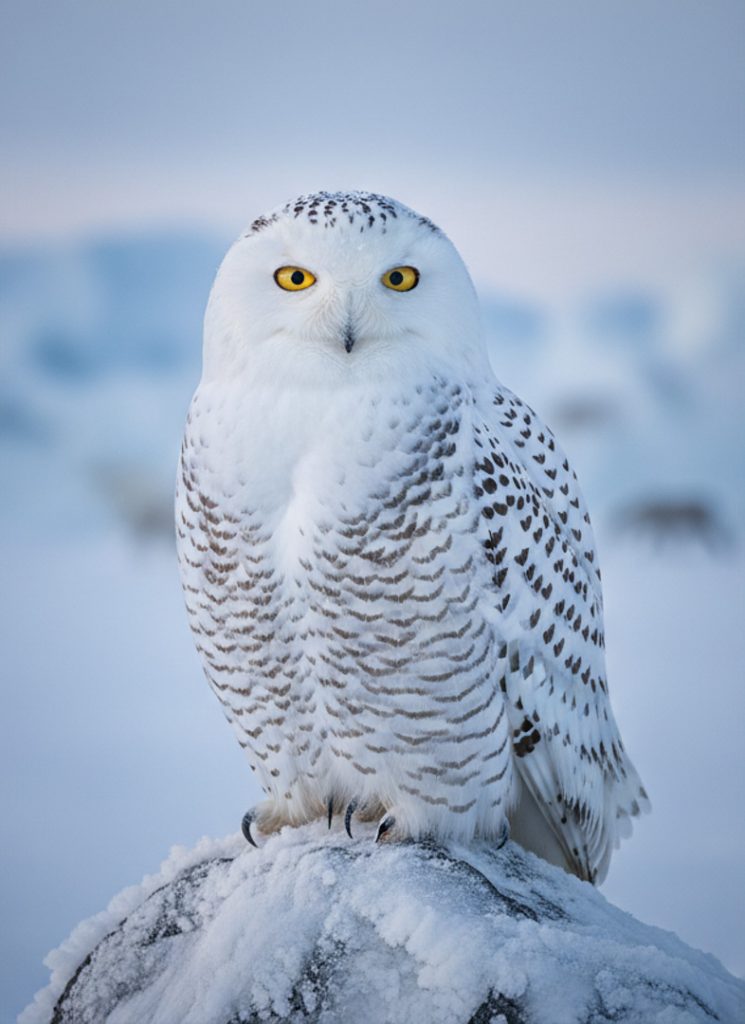
Snowy Owl: A Majestic Icon of the Arctic Ecosystem
The Snowy Owl is one of the most striking and well-adapted birds thriving in the harsh Arctic environment. Known for its pure white plumage that blends seamlessly with the snow, this majestic bird plays a vital role in the Arctic mammal ecosystem. Its presence is not only a symbol of the tundra’s resilience but also an important predator that helps maintain ecological balance.
Habitat and Adaptations
Snowy Owls inhabit open Arctic tundra regions, where extreme cold and limited vegetation dominate. Their thick feathers provide insulation against freezing temperatures, while their keen eyesight and silent flight make them formidable hunters. Unlike many owls, Snowy Owls are largely diurnal, hunting both day and night to maximize food intake during the short Arctic summer.
Diet and Ecological Role
Primarily, Snowy Owls prey on small mammals, especially lemmings, which constitute the bulk of their diet. They also hunt Arctic hares, birds, and fish when available. This predation controls mammal populations, preventing overgrazing and preserving the fragile tundra vegetation. Moreover, their nesting habits create habitats for other species by influencing local biodiversity.
Conservation Notes
Climate change poses threats to the delicate balance of the Arctic ecosystem, impacting Snowy Owls’ food sources and breeding grounds. Understanding and protecting these birds is essential for maintaining the health of the Arctic environment.
By appreciating the Snowy Owl’s unique adaptations and ecological contributions, readers can gain insight into the dynamic and interconnected Arctic ecosystem, where every species plays a crucial role.
You can visit our shop to download this beautiful print at Etsy.