Arctic Hare
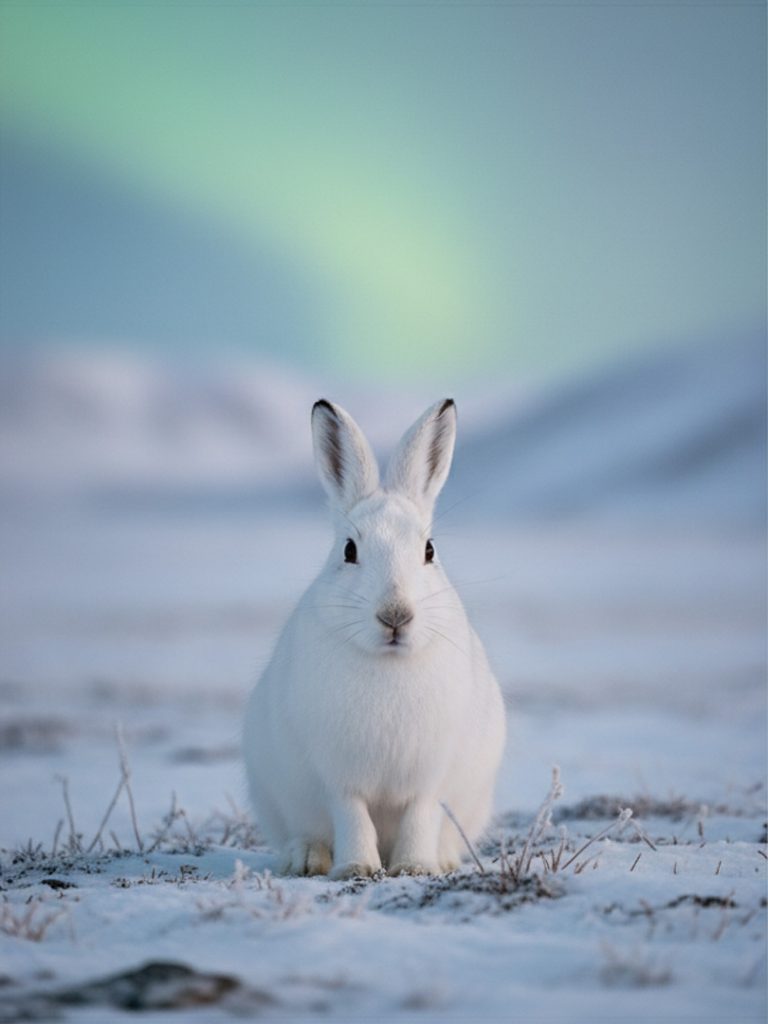
The Arctic Hare: Adaptations for Survival in Extreme Cold
The Arctic Hare is a remarkable animal uniquely adapted to survive the harsh, icy conditions of the Arctic tundra. Known scientifically as Lepus arcticus, this species thrives where temperatures can plunge well below freezing and snow covers the ground for much of the year.
Physical Adaptations
– Thick, white fur provides excellent camouflage against snow and protects against extreme cold.
– Large, powerful hind legs enable swift, long-distance hopping to escape predators like Arctic foxes and snowy owls.
– Compact body shape reduces heat loss by minimizing exposed surface area.
Behavioral Traits
Arctic hares are primarily herbivores, feeding on woody plants, mosses, and lichens found beneath the snow. They are well adapted to survive seasonal food shortages by eating twigs and bark. During winter, they often seek shelter by burrowing shallow depressions in the snow, creating windbreaks to conserve warmth.
Survival Strategies
– Solitary or small group living helps them monitor threats while reducing competition for scant resources.
– Rapid reproduction during short Arctic summers ensures population stability despite harsh conditions.
The Arctic hare’s impressive adaptations make it one of the most resilient species in the polar environment. By understanding these unique traits, readers can appreciate the incredible biodiversity that exists even in Earth’s most extreme habitats. This knowledge highlights the importance of conserving Arctic ecosystems amid changing global climates.
You can visit our shop to download this beautiful print at Etsy.