Musk Ox
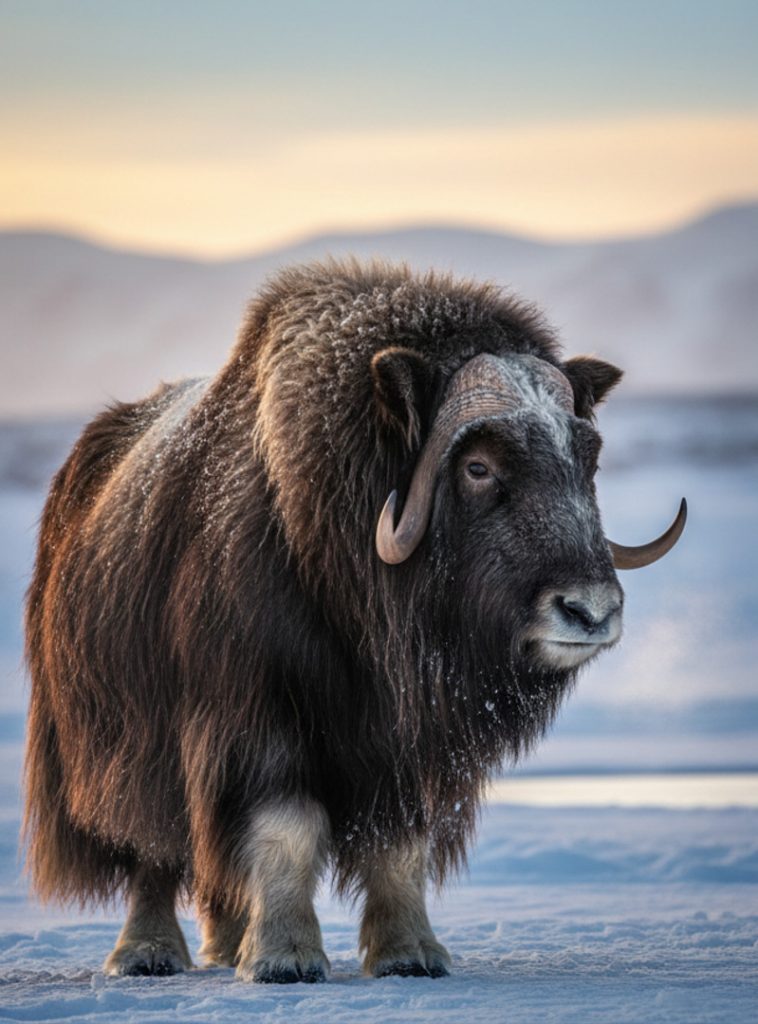
Musk Ox: Nature’s Ancient Survivor
The musk ox is a remarkable Arctic mammal known for its resilience in some of the harshest environments on Earth. These large, shaggy herbivores are native to the tundra regions of North America and Greenland, thriving where temperatures can plunge well below freezing. Their thick, woolly coat – including a soft underlayer called qiviut – provides exceptional insulation against frigid winds.
Physical Characteristics and Adaptations
Musk oxen have sturdy, stocky bodies with curved horns that offer defense against predators like wolves. They are herbivores, grazing mainly on grasses, mosses, and Arctic willows during summer, and relying on stored fat reserves during the long winter months. Their unique ability to conserve energy and their social behavior, forming protective circles with adults shielding the young, helps them survive.
Ecological Importance and Conservation
These animals play a key role in Arctic ecosystems by influencing vegetation patterns and serving as prey for predators. After near extinction due to overhunting in the 19th and 20th centuries, musk ox populations have rebounded thanks to conservation efforts and careful wildlife management.
In summary, musk oxen are a fascinating example of adaptation and survival. Their presence highlights the delicate balance of Arctic habitats and the ongoing need to protect these unique creatures and their environment.
You can visit our shop to download this beautiful print at Etsy.