Caribou Reindeer
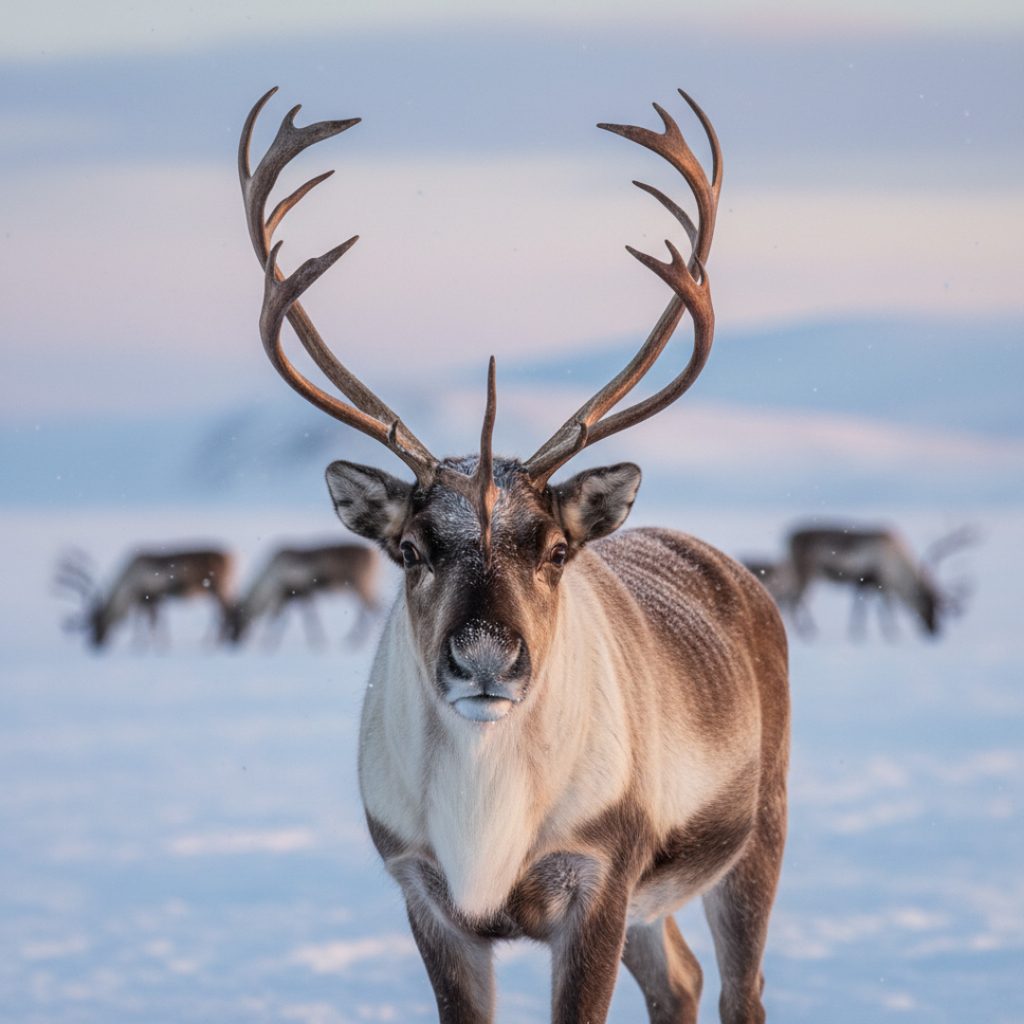
Caribou (Reindeer): Masters of the Arctic Wilderness
Caribou, also known as reindeer, are fascinating creatures that thrive in the cold, harsh environments of the Arctic and sub-Arctic regions. These remarkable animals are perfectly adapted to survive extreme weather conditions, making them an iconic symbol of resilience and endurance.
Physical Characteristics and Adaptations
Caribou are distinguishable by their sturdy build, thick fur, and large, broad hooves. Their fur consists of hollow hairs that provide excellent insulation against sub-zero temperatures. The broad hooves function like snowshoes, helping them walk on soft snow and muddy terrain with ease. Both male and female caribou grow antlers, which are used for defense and foraging through snow to reach food.
Migration and Behavior
One of the most extraordinary aspects of caribou is their migration. They undertake one of the longest land migrations of any mammal, traveling up to 3,000 miles annually in search of food and calving grounds. This journey is vital for survival, as it allows them to exploit seasonal resources while avoiding predators and harsh conditions.
Ecological and Cultural Importance
Caribou play a crucial role in the Arctic ecosystem by influencing vegetation patterns and serving as prey for predators like wolves and bears. For many Indigenous communities, caribou are a vital resource, providing food, clothing, and cultural identity.
Understanding caribou behavior and ecology is essential for conservation efforts, especially as climate change threatens their fragile habitats. By appreciating these magnificent animals, we acknowledge the delicate balance of Arctic life and the urgent need to protect it.
You can visit our shop to download this beautiful print at Etsy.